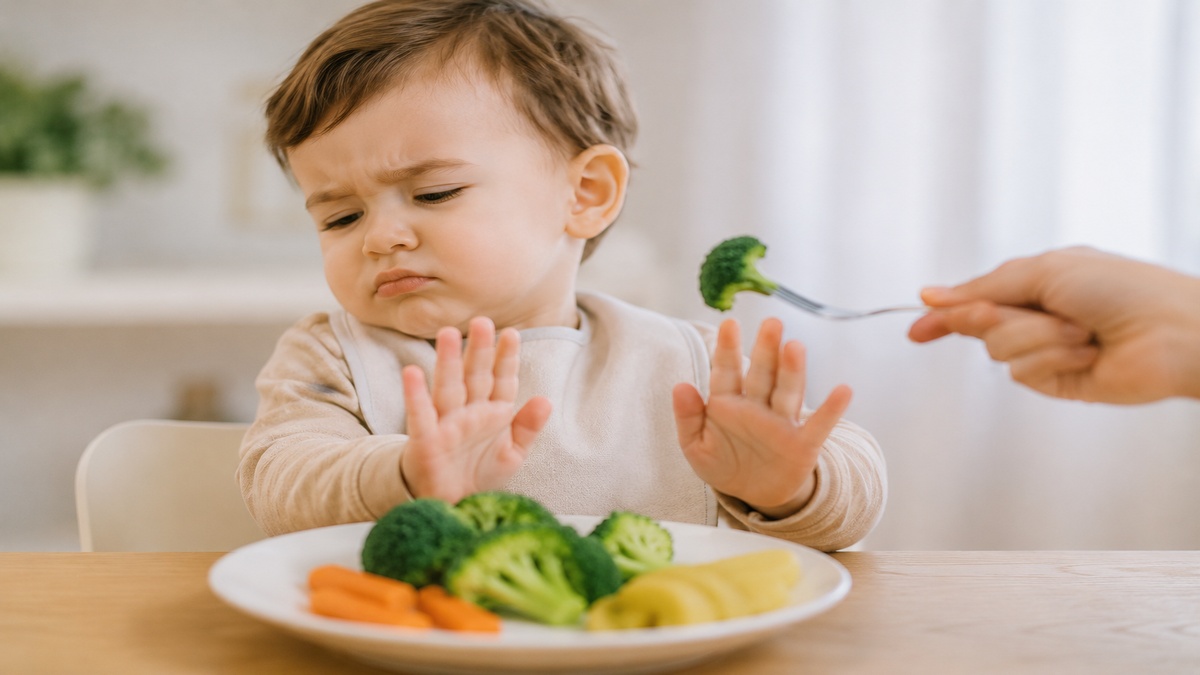
"My child won't eat anything" — this is the most common complaint from parents of children aged 1–5. Good news: picky eating at this age is developmentally normal. Bad news: the wrong response can make it permanent.
Strategy 1: The Division of Responsibility
The Ellyn Satter method — the most research-backed approach for picky eaters:
- Parent decides: what to serve, where, and when
- Child decides: whether to eat and how much
This reduces mealtime conflict and gives children appropriate autonomy — pressure and force-feeding reinforce pickiness.
Strategy 2: Expose New Foods 10–15 Times
Research shows children need 8–15 exposures to a new food before accepting it. Refusal in the first five attempts is completely normal — keep offering calmly without pressure.
Strategy 3: New Food + Familiar Food
Every meal includes one new item alongside something already liked. The new food is a "guest" — child doesn't have to eat it, but must get acquainted with it at the table.
Strategy 4: Family Meals Together
Social eating reduces food anxiety. Children see that others eat these foods too. Imitation instinct is the most powerful tool available — more effective than any coaxing.
Strategy 5: Encourage Independence at the Table
Let children self-feed even if it's messy. Spoons, forks, and fingers — all tools are equally valid for toddlers.
Strategy 6: Avoid Mealtime Rushing
Allow at least 20 minutes per meal. Rushing and pressure are the biggest mistakes. Children associate stress with food, creating negative eating relationships that can last decades.
Strategy 7: Reward Curiosity, Not Consumption
For 2–3 year olds: stickers or drawings for trying (not finishing) new foods. This gamifies eating in a healthy way — no pressure, just curiosity rewarded.
Strategy 8: Involve Children in Cooking
Research confirms children who help in the kitchen eat 3× more variety. Age-appropriate tasks: stirring, pouring, washing vegetables.
"My hands made this" — this sense of ownership reduces wariness of unfamiliar foods.
mom menu daily plans help parents maintain variety — automatically combining new and familiar foods at every meal.