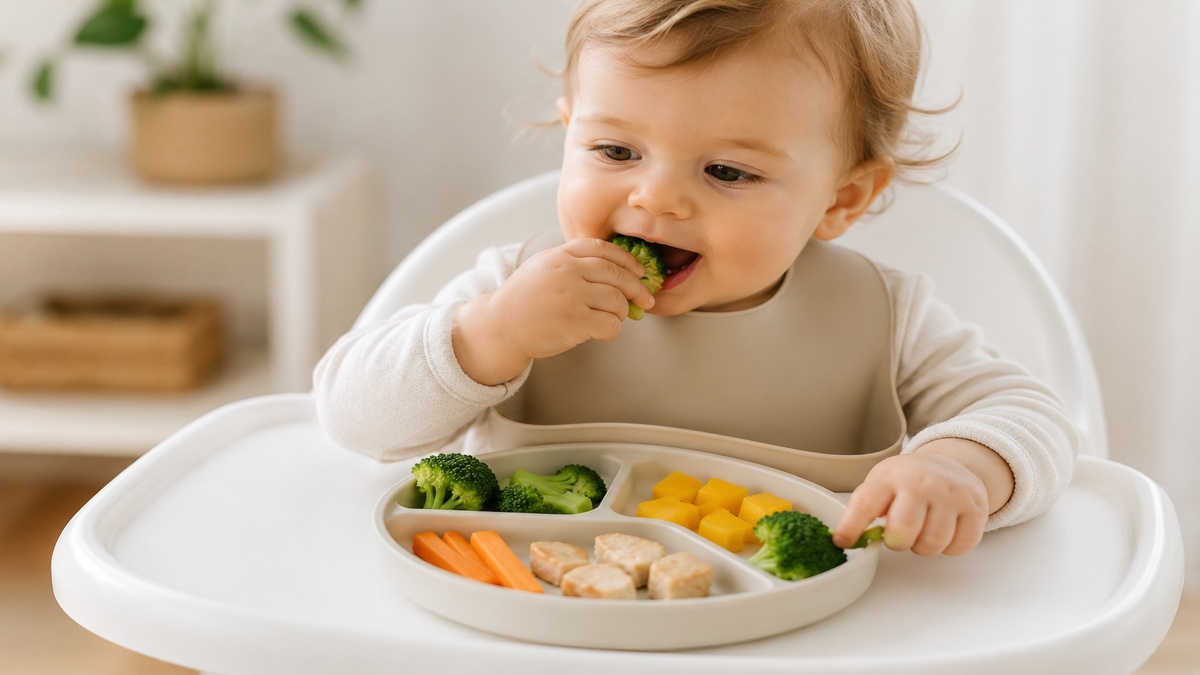
Baby-Led Weaning (BLW) has been popular worldwide for 15 years, but many parents are still unfamiliar with this approach. BLW means transitioning to solid foods without purees — going directly to "real" food in age-appropriate sizes and textures.
Core BLW Principles
Starting at 6 months with readiness signs, offer soft or cooked foods in pieces — not mashed. Size guidelines:
- Until 7–8 months (before pincer grasp develops): finger-length sticks — 7–8cm long
- After 8 months: smaller pieces, 1–2cm in size
Benefits of BLW
Research shows:
- BLW babies become significantly less picky eaters
- Fine motor skills develop earlier
- Babies learn natural hunger and fullness cues — associated with lower obesity rates later
- Family mealtimes become easier — baby eats what the family eats
BLW Challenges — Honestly
- Lots of mess — this is normal, this is learning
- Lots of food on the floor — in the first weeks, baby may "play" more than eat
- Choking fear — gagging is different from choking; BLW babies learn to manage food texture through gagging
Good First BLW Foods
- Rice or oat porridge — slightly thick, offered on a spoon or preloaded
- Broccoli florets — well cooked, soft enough to squish
- Banana — cut into three strips (leave a little peel for grip)
- Rice pancakes — no added salt
- Chicken strips — unsalted, tender
- Zucchini — finger-sized pieces, well cooked
BLW vs Traditional Purees — Who "Wins"?
Honestly: there's no single right approach. Many parents use a combined method — purees for some meals, BLW for others.
Research confirms both approaches have good outcomes when you follow the baby's lead and interest.