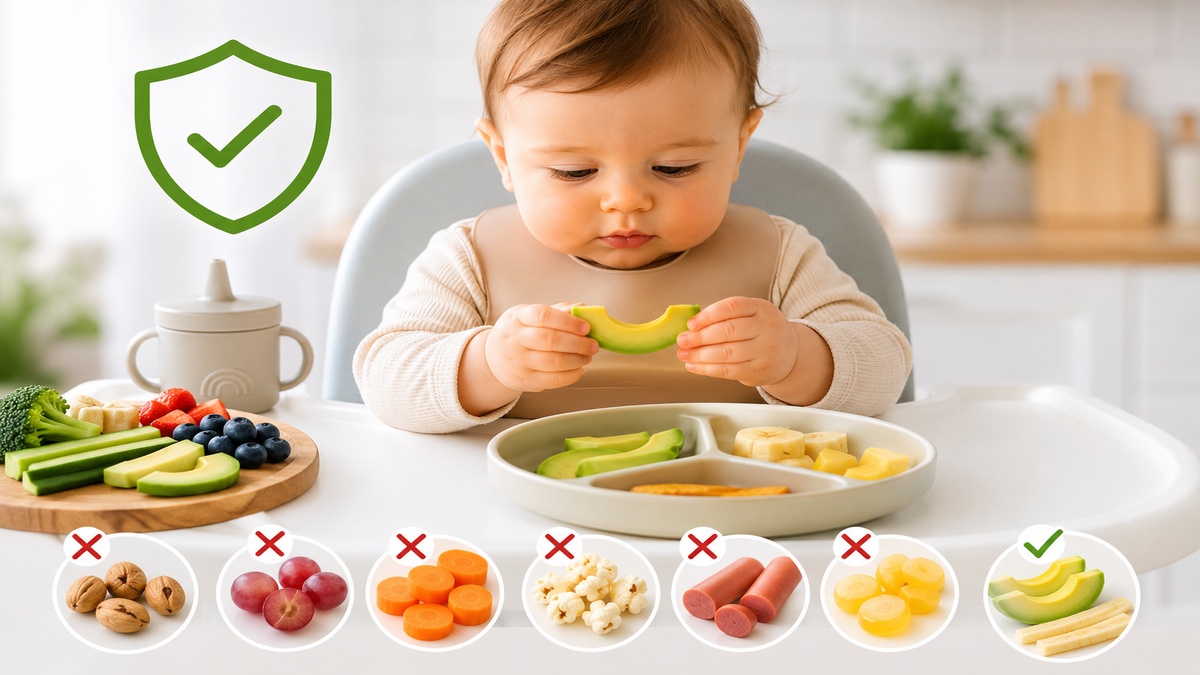
Choking is one of the most common accidents involving children, and it causes great anxiety for parents. Having the right information significantly reduces this risk — and can save a life.
The Key Difference: Choking vs. Gagging
Babies often gag during feeding — this is completely normal. Gagging means the airway defense mechanism is working. True choking looks different:
- Baby makes no sound
- Mouth is open but no air moves
- Face turns red or blue
In this case — 5 back blows followed by 5 abdominal thrusts immediately. Red Cross infant first aid courses teach this maneuver step-by-step.
Dangerous Foods Under Age 1
- Whole round fruits — grapes, cherries (only cut into quarters)
- Uncut meat or hot dogs
- Raw vegetables — whole carrot sticks or corn on the cob
- Whole nuts — any variety
- Crackers or bread if baby gets a large handful at once
Dangerous Foods Ages 1–3
- Grapes — always cut into quarters
- Raw carrots — only grated or cooked soft
- Stone fruits — peaches, plums — always remove the pit
- Popcorn — absolutely not before age 4
Safe Eating Rules
- Baby should always eat sitting upright
- Never leave baby alone while eating
- Cut round fruits into small pieces or cook until soft
- Cut all foods into 1cm × 1cm pieces for toddlers
- Don't use food to distract while walking or playing
Learn the Heimlich Maneuver
We strongly recommend all parents take an infant CPR and choking response course. Baby and child first aid courses are available online and in-person. This knowledge can save your child's life.