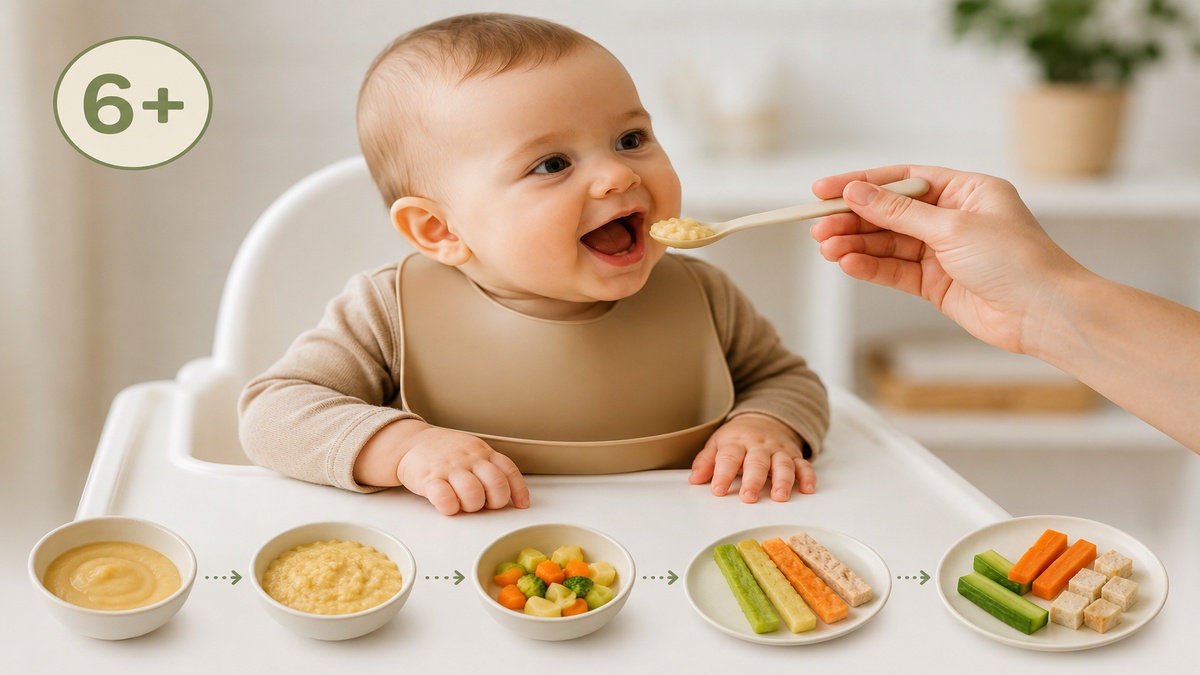
Starting solid foods is one of the most important milestones in your baby's development. The World Health Organization (WHO) recommends introducing solids at around 6 months, while breast milk or formula remains the primary source of nutrition.
Signs Your Baby Is Ready
There are three key readiness signs that every pediatrician looks for:
- Baby can sit up with minimal support and hold their head steady
- The tongue-thrust reflex has diminished — baby no longer automatically pushes food out
- Baby shows interest in food by reaching for it, opening their mouth, and watching others eat
First Foods — Where to Begin?
Start with single-ingredient purees, introducing each new food separately:
- Vegetables: pumpkin, sweet potato, carrot, zucchini
- Fruits: apple, pear, banana
- Grains: rice cereal or oatmeal porridge
Introduce one new food every 3–4 days to watch for allergic reactions. The American Academy of Pediatrics confirms this approach as the gold standard.
Feeding Frequency by Age
- 6–7 months: 1–2 times daily, 2–3 tablespoons
- 8–9 months: 2–3 times daily, 100–150ml portions
- 10–12 months: 3 main meals plus 1–2 snacks
Always follow your baby's hunger and fullness cues — never force-feed. Mealtime pressure creates negative associations with food that can persist for years.
Common Mistakes to Avoid
- Starting too early or too late (before 4 months or after 7 months)
- Adding salt or sugar — strictly off-limits before age 1
- Limiting variety — early exposure to diverse flavors reduces picky eating later in childhood
- Force-feeding in any form
mom menu creates personalized daily meal plans based on your child's exact age and nutritional needs — automatically, for every single day.